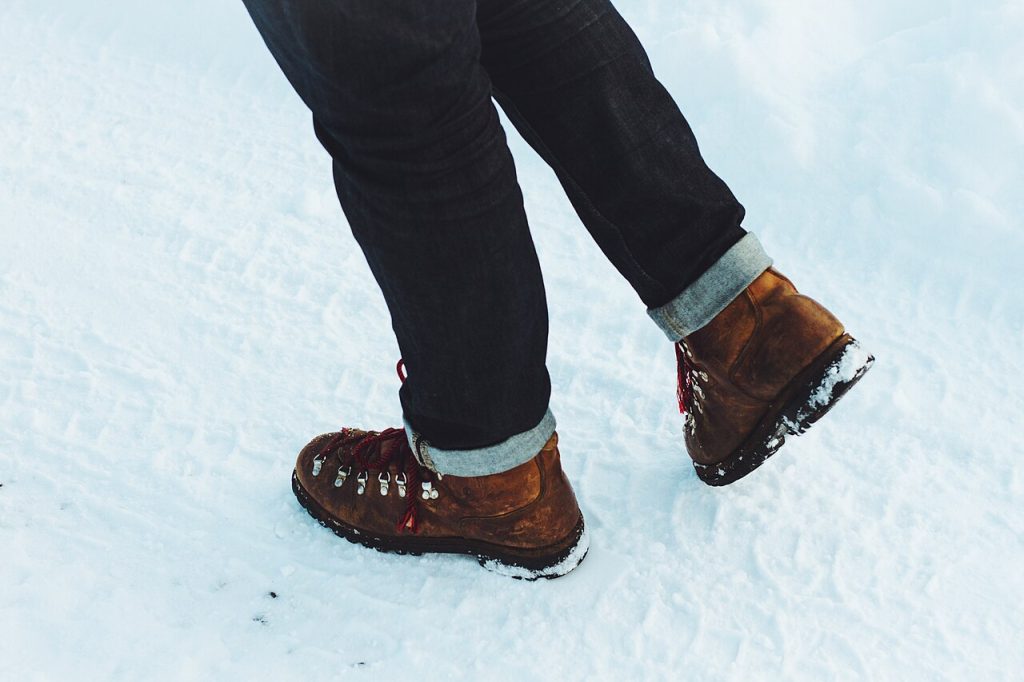
Two shells, two different sets of trade-offs. Here is how leather and synthetic winter boots actually differ on warmth, wet snow, wear and cost, and which one fits your winter.
Quick take
- Neither leather nor polyurethane is waterproof on its own; a waterproof claim rests on a treatment, a membrane or sealed construction.
- The lining and the fit affect warmth more than the shell does, and feet swell by about 4% to 5% over the course of a day.
- Leather resists tears, punctures and abrasion better and usually lasts longer, while synthetic shells are lighter, cheaper and need no break-in.
- Synthetic boots cost less up front, but a leather pair spread across several winters can work out cheaper because it needs replacing less often.
- Choose by the weather you actually walk in, not the coldest number in the forecast.
Walk into any Canadian shoe shop in November and winter boots split into two camps: leather uppers that look like they mean business, and synthetic pairs that weigh less and cost less. The choice feels bigger than it is. The outer material decides how a boot ages, how much care it needs and how it feels on your foot, but warmth, waterproofing and grip come from what is built around and under that shell. This comparison puts the two side by side so you can match a pair to your winter and your routine.
Leather and Synthetic Shells: What You Are Actually Comparing
Leather used in footwear is typically cowhide that has been tanned or chemically treated, which makes it strong, durable and flexible. Synthetic leather is a man-made material, usually polyurethane and often sold as PU leather, built to mimic the look of the real thing. Both are shells, and neither is waterproof on its own; boots sold as waterproof rely on a durable water repellent finish or a membrane.
That matters because shoppers compare a leather boot with a synthetic boot at different price points and credit the material for the difference. A cheap leather boot with a thin lining and an uninsulated sole will feel colder and wear faster than a well-built synthetic one.
| Feature | Leather shell | Synthetic shell |
|---|---|---|
| Weight | Usually heavier | Noticeably lighter |
| Break-in | Takes time to shape to the foot | Comfortable from the first wear |
| Abrasion and tear resistance | High, from a continuous fibre structure | Lower, though still serviceable |
| Breathability | Absorbs sweat and releases it slowly | Often described as more breathable |
| Water resistance | Needs a treatment or a membrane | Needs a treatment or a membrane |
| Care | Conditioning and drying time | Wipe clean, refresh the finish |
| Lifespan | Can last several winters with care | Shorter, and less often repaired |
| Price | Higher | Lower |
Warmth: Why Lining and Fit Matter More Than the Outer Material
Leather insulates better than synthetic leather, but the gap is small next to the difference a lining makes. In very cold temperatures you should not skip an additional lining, and most Canadian winter boots get their warmth from insulation built into the boot rather than from the shell. For the basics, see our guide to insulated winter boots, and for the numbers, what temperature ratings on winter boots mean.
Fit matters as much. Feet swell by about 4% to 5% over a day, and leather adapts to that swelling better than a stiff synthetic shell, which is why a boot that fits at 8 a.m. can feel tight by evening. A sweating guarded hotplate, which holds its measuring plate at 35°C to represent skin temperature, is how labs measure heat and moisture passing through leather, coatings and fabrics. That measures a material, not your feet at a bus stop.
Wet Snow, Slush and Road Salt: Waterproofing, Breathability and Drying Time
Slush is the real test in most Canadian cities, and it exposes the weakness both materials share: leather and polyurethane are somewhat water resistant but not waterproof on their own. A waterproof boot earns the label through a treatment, a membrane or sealed construction, and that build matters more than the upper material.
Such claims should be backed by testing. One footwear technology supplier describes boots flexed in a water bath for hundreds of thousands of cycles (SATRA method TM77), and a centrifuge test that spins a water-filled container at 250 rpm to push water against the outside of the boot (TM444), with a limit of less than 10% weight gain from absorbed water. Breathability is measured separately, through water vapour permeability tests on the upper materials.
Drying time separates the two in daily use. Leather absorbs sweat and releases it slowly, so a soaked pair needs time to dry. Synthetic uppers shed surface water and dry faster, though the lining and footbed hold moisture either way. Road salt leaves white tide marks on leather and dulls synthetic finishes, and it needs to be lifted off rather than scrubbed in. Our guide to removing road salt stains has the method.
Durability: How Each Shell Ages Over Several Canadian Winters
Leather’s structure is its advantage. Its natural, three-dimensional, continuous fibre structure gives it high tear resistance, resistance to tears spreading, puncture resistance and tensile strength, and it becomes more durable when wet. Real leather is regarded as tougher and more abrasion resistant than faux leather, which is durable but less so, and leather boots generally do not need replacing as often.
Synthetic shells scuff and abrade, can separate at flex points, and are less likely to be repaired. Synthetic patent leather is the extreme case: it can develop cracks in less than a year of use that cannot be fixed.
Where a boot fails is often not the shell. Labs test flex resistance at the vamp, abrasion resistance, seam strength, sole bond and hardware corrosion separately, because a boot with a sound upper can still fail at a seam.
Care and Maintenance: Conditioning, Cleaning and Seasonal Storage
Leather rewards attention. Museum guidance on leather and skin objects notes that with proper storage and care these materials can stay in good condition for many years, and it covers specifics such as removing mould and looking after vegetable-tanned leather. At home the routine is simpler: brush off salt and grit, dry the boots away from direct heat, and put in a shoe tree while the leather is still slightly warm so creases smooth out and the shape holds.
Synthetic boots need less work but are not maintenance free. Wipe them down, rinse off salt, and expect the water-repellent finish to wear away, since that finish is what makes a water-resistant boot shed water. Reapplying a treatment restores some performance. Store both clean and dry, off a damp basement floor.
Cost Over Time: Purchase Price, Repairs and Replacement
Synthetic boots win on the sticker. Faux leather is much cheaper than the real thing, and the gap in Canadian dollars can be wide enough to decide the purchase on its own. The arithmetic changes over several winters. Leather boots are more durable and need replacing less often, so a higher price spread across several seasons can land below the cost of buying cheap pairs repeatedly.
Repairability is the variable shoppers forget. Whether a worn boot can be resoled or patched depends on how the sole is attached and whether the upper can take the work, which is a construction question rather than a leather versus synthetic one. A synthetic shell that has cracked beyond repair removes the option entirely.
Budget for upkeep. Conditioner, a rewaterproofing treatment and shoe trees are small costs that extend the life of a leather pair.
How to Choose Based on Your Winter, Your Commute and Your Budget
Leather suits a winter with a lot of wet snow and salt, a commute that includes waiting outdoors, and a wearer who will spend a few minutes a season on care. It also suits anyone who wants ankle support and stability from the upper. Dry-cold winters reward leather with a proper lining; mild slushy ones reward the material that handles repeated soakings.
Synthetic suits a lighter boot for city commuting, a tighter budget, and a wearer who wants comfort on the first wear rather than a break-in period. It is also the practical pick if you rotate boots or keep a pair at the office.
Buy for the weather you actually walk in, not the coldest number in the forecast. If you are unsure between sizes, our piece on whether winter boots should be sized up is a quick check before you order.
Try both pairs on late in the afternoon with the socks you wear in January, then check the lining, the sole insulation and the waterproofing claim before you pay.
Your style questions
Q: Are leather winter boots warmer than synthetic ones?
A: Leather insulates better than synthetic leather, but the gap is small next to what a lining adds. In very cold temperatures you should not skip an additional lining, whatever the shell.
Q: Do new leather winter boots need extra waterproofing?
A: Leather is water resistant rather than waterproof. A boot sold as waterproof depends on a durable water repellent finish or a membrane, and that finish wears away with use and needs refreshing.
Q: Can synthetic winter boots be repaired?
A: Less often than leather. Synthetic shells are less durable and more likely to be replaced outright, and cracks in harder synthetic finishes cannot be fixed.
Q: How long should a pair of winter boots last?
A: It depends on the shell, the construction and the care. Leather and skin can be kept in good condition for many years with proper storage and care, while synthetic shells wear faster and are less often repaired.