A winter wedding, holiday party or gala asks one outfit to do two jobs. Build the indoor look first, then solve the cold with thin layers, a coat you can check and boots you can swap.
Quick take
- The wording on the invitation sets the baseline: black tie means long hemlines, cocktail leaves room for colour, print and proportion, and casual stays polished with no jeans.
- Midi and maxi dresses are the easiest winter choice for Canadian events, especially paired with closed-toe shoes or boots and thermal tights underneath.
- Warmth comes from thin layers nobody sees, such as thermal tights and long-sleeved bodysuits; thick layers are what spoil the line of a dressy outfit.
- Bring two pairs of footwear: winter boots for the sidewalk and parking lot, dress shoes for indoors, since a long dress hides boots in outdoor photos.
- Test the full outfit, coat and shoes included, well before the day so a tailor has time to fix any fit problems.
A winter wedding, holiday party or gala in Canada asks one outfit to do two jobs: hold up on an icy sidewalk at minus 20 and still look deliberate once the coat comes off. Most dressy outfits fail at one end or the other, either too thin for the walk from the car or too warm and bulky to sit through a long dinner. The fix is to plan the indoor outfit first and then solve the cold around it.
Start With the Event and Venue, Not the Forecast
The wording on the invitation is the starting point for every other decision. Black tie sits at the formal end and asks for long hemlines. Cocktail gives you latitude on colour, print and silhouette. Semi-formal sits a step below that, and casual is looser again, though it should still read as considered and stops short of denim. If the wording on the card is vague, our guide to wedding guest dress codes, decoded explains what each label usually means in practice.
Then read the venue. A ceremony outdoors where it might snow, an indoor ceremony in a city hotel and a ski lodge ask for three different levels of warmth. The forecast matters less than the minutes you will really spend outside: the walk from the parking lot, the queue at the door, the group photos on the steps. Count those minutes honestly and plan for them rather than for the whole evening.
| Dress code | What it asks for | Where the warmth goes |
|---|---|---|
| Black tie | Maxi hemline in a fabric with weight, such as satin or jacquard, and one focal point | Tights under the skirt, a wrap over the shoulders |
| Cocktail | Midi dress, or a suit with an easy flowing line and a draped top rather than a shirt | A thin long-sleeve layer underneath, boots for the walk in |
| Semi-formal or casual | Relaxed but polished, no jeans at the casual end | A knit layer that stays on indoors |
Choose an Indoor Outfit You Can Actually Wear
Build the outfit you will sit in all evening, not the one that looks best in the mirror for thirty seconds. Sleeves do a lot of the work: a dress with long sleeves reads as winter wear without extra styling. Midi and maxi lengths are the easiest choice, since they cover more leg, suit the season and sit naturally over closed-toe shoes or boots. Structure helps as well; a shaped bodice, a defined waist or a clean tailored seam holds up under heavier fabric in a way that a loose, thin dress does not.
For black tie, that means a maxi in a fabric with some weight, cut so there is room underneath for warm tights. An interesting neckline, asymmetrical or off the shoulder, does the visual work, which means you can stop at one focal point instead of adding necklace, earrings and bracelet together. Cocktail attire is more forgiving: a midi dress, or a suit cut with an easy, flowing line rather than a stiff boxy shape, finished with a draped silk top in place of a shirt. Colour is where you can be bold here, and a coordinated set in a strong red, saffron or blue carries more impact than another black dress.
Richer colours and soft muted neutrals hold up in winter rooms and against snow. Sleeveless and mini dresses are still options, as long as the accessories carry the warmth: a fur shawl or cape, an overcoat, opaque tights and gloves.
Add Warmth Without Adding Bulk
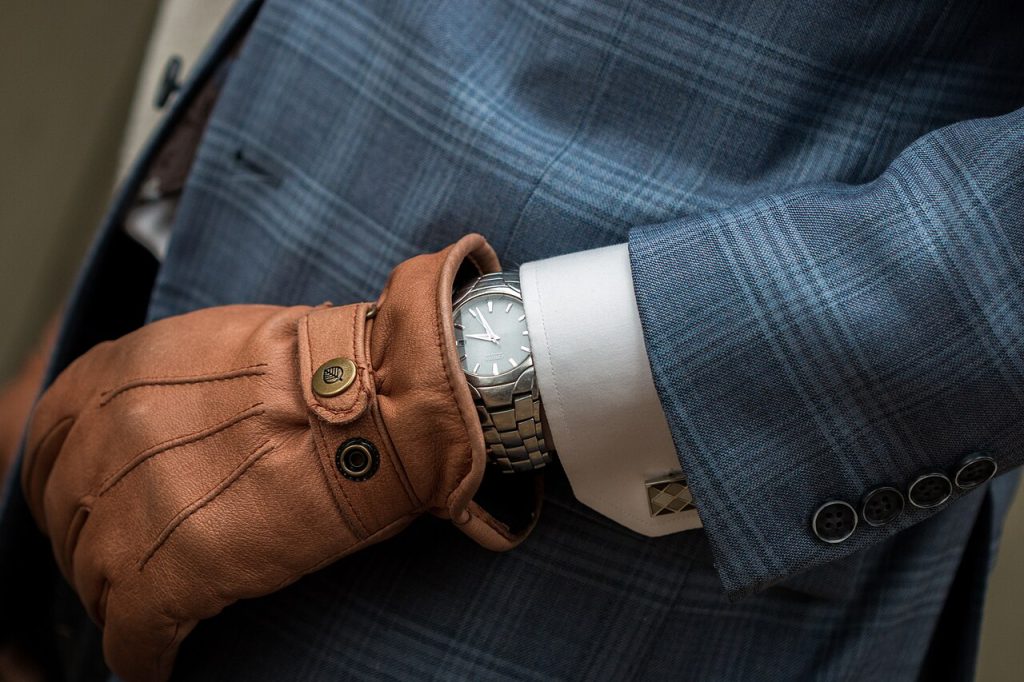
Warmth in a dressy outfit comes from thin layers nobody sees, not thick ones everybody sees. Thermal tights or leggings under a dress and a long-sleeved bodysuit in a nude tone add heat without changing the silhouette. A fine turtleneck under a sleeveless or short-sleeve dress does the same job and stretches a spring or fall piece into winter. In menswear the equivalents are a thermal undershirt and wool socks, neither of which shows once the jacket is on.
Bulk usually starts where a thick layer meets a fitted garment: a chunky knit under a slim jacket, or a heavy sweater over a dress that already has structure. Our explanation of why your winter outfit always looks bulky goes into the mechanics. The short version is that each layer should be thinner than the one above it, and only the outermost piece should have real volume.
Concentrate the warmth where you feel cold first: legs, neck, hands. Tights, a scarf that comes off at the door and a pair of thin gloves cover most of the outdoor minutes, and all three can disappear into a bag once you are inside.
Style tip
Nobody sees what is under the dress or the suit, so thin thermal layers are worth adding even to a formal outfit. A long-sleeved bodysuit and thermal tights add warmth without changing how the outfit fits.
Pick Outerwear You Can Check or Carry
The coat solves the outdoor half of the problem and creates the indoor half: once you are inside, you need somewhere to put it. Faux fur, a velvet cape or a long wool coat handles the outdoor stretch and holds up in photos, and plain or neutral tones work better than loud prints or neon that pull attention away from the outfit underneath. Our guide to layering for cold weather explains how the coat, the mid layer and the base layer divide the work between them.
Think about what the venue actually offers. A hotel with a staffed coat check lets you wear the warmest thing you own. A community hall with an unsupervised row of hooks calls for a less precious coat, or one you are content to keep on the back of your chair. If you are not sure which you are walking into, ask the host or the venue beforehand; coat storage is the kind of detail nobody thinks to put on an invitation.
For photographs, warm tones read clearly against snow: camel and cognac stand out against white ground and dark pines, and a saturated red coat against snow is arresting, though it only works if you commit to it rather than treating it as an afterthought. A scarf or headscarf in the same colour as the coat pulls the look together.
Choose Footwear for Ice, Snow and Indoor Floors
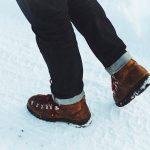
Two pairs of shoes is the honest answer for a Canadian winter event. Winter boots for the sidewalk, the parking lot and any outdoor photos, and dress shoes for inside. Photographers who shoot winter weddings recommend exactly that split: boots for outdoor shots, where a long dress hides them, and the dress shoes saved for indoor portraits. Dress shoes are also easier to carry than to walk in on ice.
Pair midi and maxi dresses with closed-toe shoes or boots, which keeps the hem clean and the feet warm. Ankle boots, knee-high boots and over-the-knee boots all work under a dress, and the pairing holds up through the cold months. When you are choosing the boots for the walk, look at insulation and tread rather than style alone; our guide to insulated winter boots explains what the ratings mean.
Then think about surfaces. Polished floors indoors are slippery in wet boots and in new shoes alike, and ice is worse in any heel. Changing at the door handles both problems at once. If the dress shoes are new, wear them at home for a while beforehand and put a couple of blister plasters in the bag.
Test the Full Outfit Before the Day
Put the whole outfit on at home, coat, tights, shoes and bag included, and wear it for a while. Sit down, stand up, go up and down stairs, reach forward, and put the coat on over everything. This catches the problems that only appear in motion: a hem that catches on tights, a sleeve that will not fit inside the coat, a wrap that slides off when you raise your arms.
Look at the outfit in the light you will actually be in. Evening rooms are dim and warm, and a colour that looks sharp in daylight can go flat under candles. If something needs adjusting, a tailor can take in a waist or shorten a hem, and starting the work early enough leaves room for a second fitting.
Test the cold part too. Stand outside in the full outfit on a cold evening long enough to notice where you feel it first. That tells you what to add before the event instead of during it.
What to Pack or Keep in the Car
A small bag in the car or in the checked coat covers most of what goes wrong. Photographers suggest keeping a coat or shawl handy between shots, because the weather here can turn without warning and the gap between car and door is often longer than expected. Pack the indoor shoes, a spare pair of tights, gloves and a scarf that can come off.
For a long walk or a photo session, add a second layer for the legs and a compact umbrella. A man in a suit will get more use from spare socks, a lint roller and a comb than from anything else; thermal undershirts and wool socks do the warming underneath, so the coat does not have to be the warmest one he owns.
Keep anything that can leak, a flask or a wet umbrella, away from the garment bag. Boots that have been through a parking lot should be wiped down before they go back in the car.
Where to Get Help if the Outfit Still Feels Wrong
If the pieces are not coming together, other people can help before the day arrives. The host or the venue can confirm the dress code and say whether there is a coat check. A tailor can fix fit, and small adjustments usually cost less than replacing the garment.
A dress rental service solves the problem of one event and one dress. Canadian services let you choose a gown for a set number of days and then ship it back or drop it off in store, and one reported rental cost $120 CAD for four days on a gown that retailed at $650 CAD. That route suits black tie in particular, where a formal dress is unlikely to be worn twice.
Pick the outfit you will actually sit in for the evening, build the coat, boots and bag around it, and try the whole thing on, coat and shoes included, well before the event.
Your style questions
Q: Can I wear a mini or sleeveless dress to a winter event?
A: Yes, as long as the winter accessories carry the warmth: a fur shawl or cape, an overcoat, opaque tights and gloves. Long sleeves are simply the easiest route.
Q: How do I stay warm without looking bulky?
A: Keep the warm layers thin and close to the body, such as thermal tights, a long-sleeved bodysuit or a fine turtleneck under the dress. Each layer should be thinner than the one above it, and only the coat should have real volume.
Q: Do I need a second pair of shoes?
A: For most Canadian winter events, yes. Boots handle ice, snow and parking lots, while dress shoes are for indoor floors and are easier to carry than to walk in outside.
Q: What if I cannot find a dress for a black-tie winter wedding?
A: Dress rental services in Canada let you borrow a gown for a set number of days and return it by mail or in store. That suits an event where a formal dress is unlikely to be worn twice.