The belt-and-shoe rule is one of the oldest in menswear, but it is often quoted as stricter than it really is. Here is what actually matters, by colour, finish and occasion.
Quick take
- The rule is real but it is about coordination, not identical matching; stylists allow matching by style rather than exact colour.
- Finish and material matter as much as colour: leather with leather, suede with suede, matte with matte, patent with patent.
- Exact matching earns its keep with suits and formalwear; in casual wear the same colour family is enough.
- Never pair black and brown leather accessories, and match the belt to the shoes first, not to the suit.
Few menswear rules get repeated as often as this one: match your belt to your shoes. Like most rules repeated that often, it is partly true, partly outdated and partly dependent on what you are wearing that day. Below, we sort the common beliefs about belt-and-shoe matching into what holds up, what is negotiable and what you can safely ignore.
Myth: The rule is an absolute law
The rule comes from mid-20th-century menswear, when men’s wardrobes were small and leather accessories were expected to match exactly, in colour, finish and leather type. Matching belt to shoe created visual order with minimal effort, which is why it stuck.
The tradition has never fully faded. One widely cited menswear guide still states plainly that your belt should always be the same colour as your shoes. But the stylists who actually dress men for a living tend to soften it: the belt should coordinate with your shoes, if not by colour then by style. So the fact sits between the two. Matching is real and useful, but it is a guideline about coordination, not a demand for two accessories that look like they came from the same box.
Myth: Colour is all that matters
Colour is the part everyone remembers, but finish and material come first. The standard advice from shoe and belt makers is to match the leather before the colour: leather with leather, suede with suede. Stylists add a second layer: match colour with colour, matte with matte, and patent with patent. A glossy belt next to rough matte boots looks mismatched even when the shades are close.
On colour itself, the guideline is simple. Choose a belt that is the same shade as your shoes, or one shade darker. A dark brown smooth leather belt works with polished dark brown shoes; a rough, matte belt in a slightly different brown does not.
There is one rule in this whole area without exceptions: black and brown are never worn together. Black shoes take a black belt, full stop. The slip stylists see most often is a black belt worn with brown shoes, and it is jarring enough to distract from everything else you got right that day.
Myth: The rule matters equally everywhere
This is where most men get the rule wrong in the strict direction. Exact matching earns its keep in formal and business dress. With a suit or tuxedo, the belt leather and the shoe leather should line up in colour, tone and finish, creating a clean, unbroken line. With black tie, the standard is polished black patent leather shoes, so anything patent-adjacent on your belt needs to agree.
Suit colour shapes the decision too, since it decides which leathers are in play. A black suit really only pairs with black shoes, while navy and light gray suits work with every shoe colour, which makes them the most versatile suits to own. If you are weighing brown against black for a specific suit, our breakdown of brown shoes with a black suit walks through when the pairing works.
One surprising fact from stylists: with a well-fitted suit, you can skip the belt altogether, whether or not the trousers have loops. A belt only adds bulk at the waist, and suit trousers that fit properly do not need the help. For occasions where you want zero variables, such as interviews in conservative industries, our guide to job interview outfits covers the whole look, shoes included.
Myth: Casual outfits follow the same rule
Once your outfit involves jeans, chinos or a relaxed jacket with a bit of give in its structure, the word “match” quietly becomes “coordinate”. In business casual settings, keep the shade and tone nearly identical and let textures differ slightly. On weekends, staying in the same colour family is enough, as long as the pairing looks deliberate. A chestnut belt beside dark brown boots looks like a choice, not an oversight.
The formality signals run through the whole belt, not just the leather. The simpler the buckle, the slimmer the width and the less rugged the leather, the dressier the belt looks. That is handy to know when you are assembling a smart casual look and want the accessories to land at the same level as everything else; our explainer on what smart casual means covers that middle ground in detail.
Myth: Your casual belt still has to match your shoes
Even in casual wear, context decides. The pattern from stylists who break down casual outfits is consistent: if your outfit has only one layer, only two colours, or is very clean and tonal, match the belt to the shoes. The busier the outfit gets, with more layers, colours and textures, the more room you have, and the belt can instead match your sweater or jacket so those pieces work as a unit while the shoes stand on their own.
Trousers matter too. Plain, clean trousers such as white jeans create a large empty space between belt and shoes, so the two act as a frame around it and any mismatch is immediately noticeable. Busier fabrics hide more.
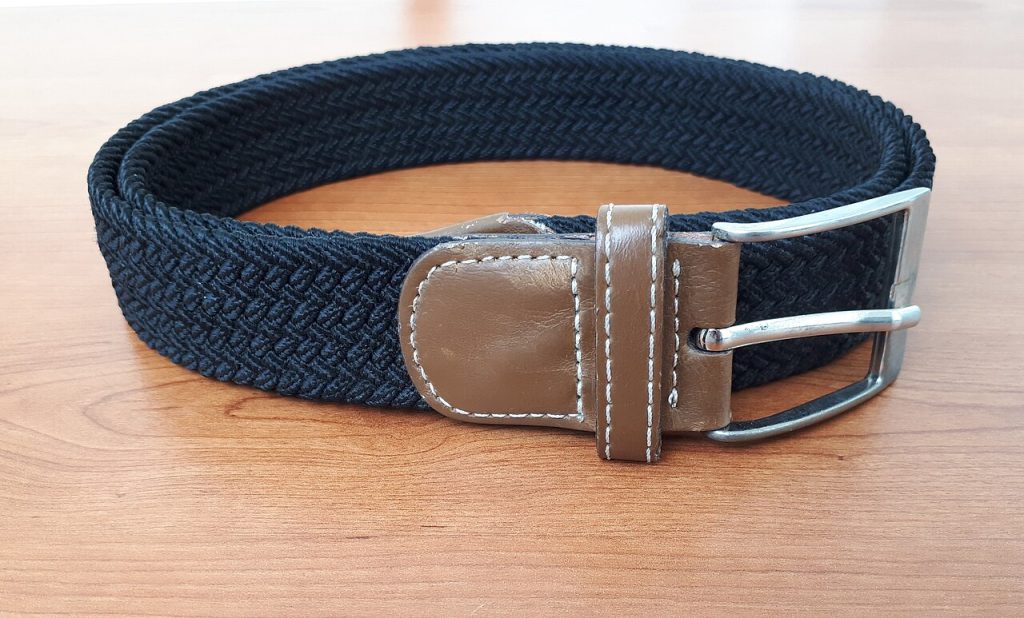
This is also where canvas and webbing belts belong. A casual or novelty belt goes best with sneakers and casual shoes, while a leather belt belongs with dress shoes. And the function of a belt does not disappear on weekends: if your jeans have belt loops, the loops are there for a reason, though with an untucked shirt you can get away without one.
Myth: The buckle is an afterthought
Buckles carry a lot of the formality signal. Almost all formal belts use a frame-style buckle, where the strap passes through the frame and a prong goes through the holes. A simple buckle suits formal occasions, while a more ornate one can work in casual settings. Stylists also suggest keeping hardware to a minimum overall, so the belt supports the outfit instead of competing with it.
One related don’t: never wear a belt and suspenders together. It reads as either a misunderstanding of how dressing works or real anxiety about your pants, and neither impression helps.
A simple way to decide every morning
The order of operations settles most debates: pick the shoe first, then the belt. Your suit or outfit colour guides which leathers are in play, but it is the belt and the shoes that need to get along with each other. From there, this table covers almost every situation.
| What you are wearing | How closely to match |
|---|---|
| Suit or tuxedo | Exact match in colour and finish |
| Business casual | Very close in shade and tone; small texture differences are fine |
| Smart casual | Same colour family |
| Weekend and jeans | Coordinate loosely; the belt can match your top half instead |
If you are building a belt collection from scratch, two belts cover most situations: a slim black leather belt with a simple buckle for tailoring, and a brown leather belt in a mid-tone for everything else. Both slots appear on our list of wardrobe essentials, because they earn their keep across outfits.
Style tip
Store your belts hung or rolled so the leather does not crease, and check them when you check your shoes; a cracked or scuffed belt undermines a match that was technically correct.
This weekend, lay out your belts and shoes together, pair them by colour and finish, and you will know exactly which gaps, if any, are worth filling.
Your style questions
Q: Can I wear a brown belt with black shoes?
A: No. Mixing black and brown leather accessories is the one version of this rule without exceptions, and it is the most common version of the mistake.
Q: Do I need a belt with a suit?
A: Some stylists argue you should skip the belt entirely if the trousers fit properly, since a belt only adds bulk at the waist. If your suit trousers have belt loops and need the help, wear one that matches your shoes in colour and finish.
Q: Does a canvas belt work with dress shoes?
A: Not really. A casual or novelty belt belongs with sneakers and casual shoes, while a leather belt belongs with dress shoes.
Q: Should the belt match the shoes or the suit?
A: Match the belt to the shoes. Your suit colour narrows down which leathers work, and the belt and shoes are the two items that need to look like they belong together.