The old rule said no, but the picture is more useful than that. Here is when brown shoes work with a black suit, which shades to pick and when black is still the smarter call.
Quick take
- Black shoes remain the most formal and traditional pairing with a black suit.
- Very dark brown, oxblood or burgundy shoes can work with a black suit in smart casual and business casual settings.
- Lighter browns and tans read as casual and are best avoided with black.
- Match your belt to your shoes and keep the rest of your leather coordinated.
- For job interviews, funerals and formal weddings, play it safe with black.
The question comes up every time a man buys his first proper suit: can the shoes be brown, or does everything have to be black? The traditional answer was a flat no, rooted in an old British convention known as “no brown in town.” The modern answer is more flexible, though the flexibility comes with conditions. Here is when the pairing works, which shades to reach for and when you should not bother taking the risk.
So, can you wear brown shoes with a black suit?
You can, but it is one of the harder pairings in menswear and it only works under the right conditions. Black shoes with a black suit is still the most formal and traditional combination, and nothing matches its sleekness. Brown with black is a deliberate departure, which means the shade and the setting have to earn it.
The reason brown is a tricky partner comes down to formality. Black leather is the most formal shoe colour, and brown reads as more relaxed, with lighter shades reading as more casual still. A black suit is the most formal suit there is. Pairing the most casual-leaning shoe colour with the most formal suit creates tension, and tension only looks good when it is controlled.
Where did the “no brown in town” rule come from?
The rule traces back to Victorian-era British dress codes that separated town from country. The City of London called for dark suits and black Oxfords, while rural dress leaned on earthier tones and brown boots. Black was seen as a city colour, and in the countryside men traditionally wore brown shoes instead. The social conditions behind that divide have long since faded, and modern tailoring has largely moved on.
What has survived is the underlying logic: shoe colour is about formality more than matching. Black signals precision and respect for the occasion, while brown signals warmth and a slightly easier attitude. Once you think in those terms, choosing shoes gets much simpler. Ask how formal the event is first, then let the suit colour fine-tune the decision.
When do brown shoes actually work with a black suit?
Brown works with a black suit in settings where the dress code is “smart” rather than strictly formal. Think business casual offices, daytime social events, dinners at restaurants and creative workplaces where nobody expects boardroom polish. In those settings, dark brown shoes can soften the formality of a black suit and make it feel more relaxed and personal.
The combination works best when the rest of the outfit agrees with it. A softer shirt, a knit tie or no tie at all, and a slightly less structured jacket all pull the look toward smart casual in a consistent way. If your shirt and tie are screaming corporate while your shoes whisper weekend, the outfit fights itself. For a fuller picture of where that middle ground sits, our piece on what smart casual means breaks down outfits that fit the code.
Which shade of brown should you pick?
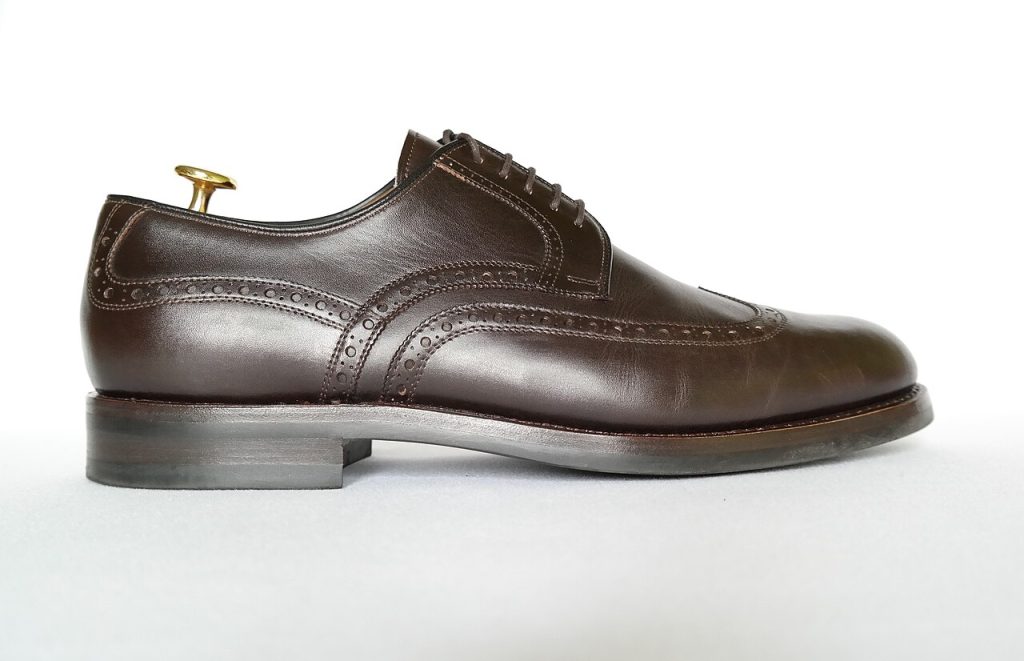
Darker is safer, full stop. A very deep brown, close to dark chocolate, is the most formal shade in the brown family and the easiest to pair with a black suit because the contrast stays subtle. Medium brown is noticeably more relaxed, and light tan or cognac leans fully casual, which is exactly the direction you do not want to go with black.
A practical guideline borrowed from stylists: keep your shoes as dark as, or darker than, your suit. Lighter shoes under a dark suit pull the eye downward and away from your face, which is where you want attention. A near-black dark brown respects that guideline. A mid-tan does not.
Shoe style matters as much as shade. A polished Oxford or cap-toe Derby in dark brown holds up better against a black suit than a suede loafer or a chunky brogue. The more formal the shoe design, the closer it stays to the suit’s level of dress.
What about belts, watches and matching leather?
Match your belt to your shoes. Brown shoes with a black belt is the most common version of this mistake, and it undoes the effort of picking the right shade. The belt should be in the same colour family and roughly similar in finish, so a polished dark brown shoe wants a dark brown leather belt rather than a rough, matte one.
The same thinking extends to your other leather. A watch strap, briefcase or bag in black will clash with brown shoes the same way a black belt does. You do not need everything to be identical, but keep the leathers in the same neighbourhood of colour and formality. Socks are easier: dark navy, dark grey or a brown-toned sock all work, while anything that fights the shoes will read as an afterthought.
Style tip
If you own a black suit and want to try brown shoes, start with one very dark brown pair and a matching belt before adding anything else. That two-piece test tells you whether the look suits your setting without a bigger investment.
When should you play it safe and wear black?
There are situations where brown shoes with a black suit will be noticed, and not favourably. Conservative settings such as law firms, banks and private clubs still hold to the older conventions, and the people judging you there have the power to affect your career. For a job interview, especially in a traditional industry, black shoes with a black or charcoal suit remove one variable entirely. Our guide to job interview outfits covers the full look.
Formal events are the other zone. At a black tie occasion, polished or patent black shoes are the standard, full stop. For weddings, the stakes are similar: a tuxedo or black suit at a formal wedding calls for polished black shoes, and photographs have a way of making a shoe choice permanent. If you are unsure what level of dress a wedding expects, our rundown of wedding guest dress codes sorts out the language on the invitation. Funerals and solemn occasions belong on this list too, where black is the respectful, understated choice.
Dark brown, oxblood or burgundy: which alternative is best?
If black feels too plain but brown feels risky, oxblood and burgundy sit in the middle. Both are deep red-brown shades that carry more personality than black while staying formal enough for a black suit. They pair naturally with the same belts and accessories as dark brown, so they slot into a wardrobe built around either colour.
A rough ranking for a black suit: polished black first for formality, dark brown or oxblood for smart casual and daytime settings, burgundy when you want the shoes to do some talking. Lighter browns rank last, because they push the outfit’s formality down faster than a black suit can absorb.
The simplest next step is to look at your calendar: if the next black-suit occasion is a formal one, buy or polish the black pair, and save the dark brown for everything looser on the schedule.
Your style questions
Q: Is it ever wrong to wear brown shoes with a black suit?
A: Yes, at black tie events, funerals and very formal occasions black shoes are the correct choice. A polished black Oxford is also the standard pairing for formal weddings and conservative offices.
Q: Which shade of brown works best with black?
A: Very dark brown, close to chocolate, is the safest because it creates a subtle contrast rather than a jarring one. Lighter tans and cognacs read as casual and tend to clash with the formality of black.
Q: Does my belt have to match my shoes?
A: Your belt should match your shoes in colour and be reasonably close in finish. If you wear brown shoes, a black belt will look off, so keep a brown belt in the same family of shade.
Q: Are oxblood or burgundy better alternatives to brown?
A: Both work as a middle ground, adding colour and personality while staying formal enough for a black suit. They are a good pick if dark brown feels flat but black feels too plain.