Both coats can get a Canadian man through winter, but they are built for different cold, different commutes and different dress codes. Here is how they stack up, so you buy the right one first.
Quick take
- A heavy wool peacoat with 70% or more wool content is comfortable from roughly minus 1°C to 10°C, and needs layers below that.
- A parka is built for sustained sub-zero cold, with down or synthetic fill and a hood that a peacoat cannot match.
- For most urban Canadians, the practical price range for a quality winter coat is $350 to $500, with a lifespan of five to eight years or more.
- Standing still generates about 100 watts of body heat while brisk walking produces 250 to 350 watts, which changes which coat you need.
- Men in milder coastal cities can often lead with a peacoat, while Winnipeg-level cold makes a parka the sensible first purchase.
Ask a room full of Canadian men how they get through winter and two answers come up again and again: the wool peacoat and the insulated parka. Both are proven designs with long histories, but they come from very different traditions, and they handle a prairie cold snap very differently. The right choice depends on your city, your commute and how much time you spend standing still outside. Here is a side-by-side look at how they compare on warmth, style, cost and everyday practicality.
The case for the peacoat
The peacoat started out as naval kit. The classic version hits at mid-thigh, cut from thick Melton wool with a double-breasted front, wide lapels and two rows of sturdy buttons. The name has nothing to do with the vegetable: one explanation traces it to “pilot cloth,” a stout twill wool that sailors shortened to “p-cloth,” while another points to the Dutch word pijjakker, a sailor’s coat made from coarse fabric.
What makes it work in cold weather is the fabric. Melton wool is densely felted, so it resists wind, and the heavy wool traps air close to the body, which keeps you warm even in cold, damp conditions. The double-breasted front does real work too, because two overlapping layers of wool across your chest cut down on drafts. A heavy wool peacoat, generally one with a wool content of 70% or more and a fabric weight above 500 GSM, offers the best warmth and wind resistance. Lighter wool blends under 350 GSM look sharp but give up thermal protection.
The honest limitation is that a peacoat offers moderate warmth on its own. It is warm enough for most winter cities when layered over knitwear, but there is no hood, no fill and no real defence against the kind of cold that makes your eyes water.
The case for the parka
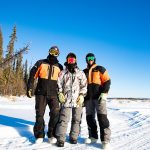
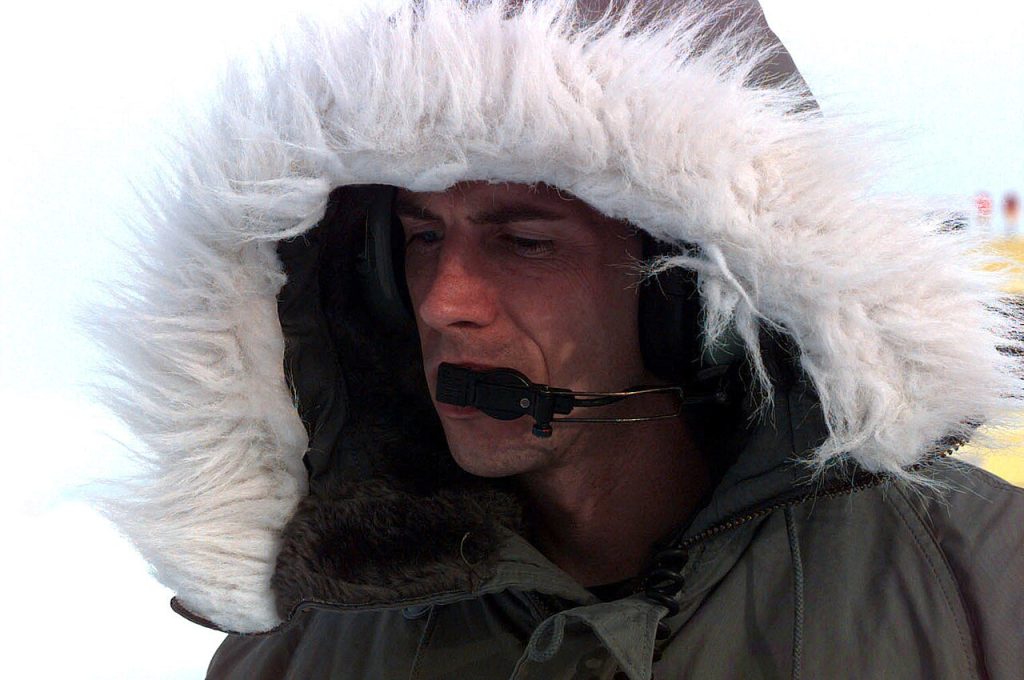
The parka was designed by the Caribou Inuit and later updated by Arctic explorers and military designers, which tells you most of what you need to know about its job. It is long enough to cover your seat, usually hooded, sometimes with fur trim around the face, and packed with down or synthetic fill for insulation. It delivers serious warmth even in sub-zero temperatures.
Two features give it the edge in real Canadian cold. The first is insulation: for most urban winters, down with a fill power of 650 or higher delivers the best warmth-to-weight ratio, while synthetic fill wins in wet coastal climates or for high-activity use. Our glossary of winter jacket terms explains what fill power and the rest of the tag actually mean before you shop. The second is the hood. When the wind chill drops, a hood with fur or fleece trim protects your face in a way no wool hat under no hood can match.
The trade-off is bulk and formality. A parka is a casual coat, and a serious one can feel like wearing a sleeping bag anywhere it is heated.
Warmth compared in real winter conditions
The numbers make the difference concrete. A thick wool peacoat with 70% or more wool content keeps most people comfortable at temperatures from about minus 1°C to 10°C, depending on layering and how active you are. Above 15°C it feels uncomfortably hot, and below minus 1°C it usually does not provide enough protection on its own.
A parka is built for exactly the conditions where a peacoat runs out. Add up what a Canadian winter actually throws at you: Vancouver deals with wet conditions around minus 5°C, Toronto and Montreal see wind chills of minus 20°C to minus 25°C in the worst weeks, and Winnipeg can reach minus 35°C to minus 45°C once wind chill is counted, which puts it among the coldest big cities on the continent. A parka tuned to a Montreal January would feel excessive in Victoria and would fall short in Yellowknife, which is why it helps to choose a winter coat based on your region rather than on a national idea of winter.
| Peacoat | Parka | |
|---|---|---|
| Comfort zone | Around minus 1°C to 10°C for a heavy wool version, more with layers | Sustained sub-zero cold, including wind chill |
| Main defence | Dense Melton wool that blocks wind | Down or synthetic fill plus an insulated hood |
| Wet weather | Handles damp cold, but wool soaks through in steady rain | Synthetic fill keeps insulating when wet |
| Style range | Works from the office to the weekend | Solidly casual |
| Fit note | Too tight blocks layers, too loose lets drafts in | Needs room for thick layers underneath |
Style: where each one works
This is where the peacoat earns its keep. Navy wool is one of the most versatile colours a man can own, and a peacoat reads as put-together over jeans and boots, chinos and a sweater, or a collared shirt and tie. Wool in general manages to keep you warm without the bulk, and it is distinguished enough for a corporate office setting. If your work wardrobe sits somewhere between a suit and sweatpants, our take on what smart casual actually means shows where a peacoat fits in. A well-fitted peacoat also makes a strong candidate for interview-day outerwear, because it looks the part without trying too hard.
The parka pairs naturally with jeans, flannel, boots and a toque, and nobody expects more of it. The mistake is wearing one over a suit or to a dressier occasion, where the coat undermines the outfit underneath. If your winter days mix a job site, a coffee meeting and school pickup, a parka covers all three. If your days mix client meetings and dinners out, the peacoat covers them better.
Cost, care and lifespan
A quality winter coat is one of the few purchases where paying more upfront often costs less per wear. For most urban Canadians, the practical sweet spot is $350 to $500, a range that usually buys five to eight winters of dependable use. With proper care, good down jackets can serve for a decade or longer, and premium coats often reach 20 years or more, which makes the cost per winter very competitive.
Wool peacoats have their own longevity record. The poet Barton Sutter wrote that a navy surplus peacoat kept him warm through a dozen winters, and well-made wool coats are common finds on the secondhand market precisely because they outlast their owners’ interest in them. Care differs between the two: wool generally needs gentle cleaning and proper storage between seasons, while down needs thorough drying after washing to restore its loft. In both cases, follow the garment’s label rather than guessing, and check the fit before you commit, since a peacoat that is too tight will not let you layer underneath and one that is too loose will let drafts in.
Which one fits your commute
How you move matters as much as how cold it is. Standing still generates roughly 100 watts of body heat, while brisk walking produces 250 to 350 watts, so a parka that is perfect for waiting at a bus stop can overheat you during an active commute.
Match the coat to the trip:
- Waiting outside, long walks, standing rinks: the parka. Low activity plus real cold is exactly what it is for.
- Brisk walking, cycling, shovelling: the peacoat, usually with fewer layers underneath, because you are generating your own heat.
- Driving or riding heated transit: the peacoat again. A heavy parka inside a warm car leads to sweating through your shirt before you arrive, while wool insulates without the same bulk.
- Short outdoor exposure, door to door: either works, and layers matter more than the coat.
If you go the peacoat route in a colder city, what you wear under it decides whether it works. Our guide to layering for cold weather walks through how to build a base, mid and outer system that lets one coat cover a wide range of temperatures.
Style tip
Before you buy either coat, look up the historical winter figures Environment Canada keeps for your city and plan for the coldest week with wind chill, not the average January day. The wind chill number is the real buying guide.
Owning both on a budget
Plenty of men who face a real Canadian winter eventually own both, and there is a sensible order to it. If you live where the challenge is wind and deep cold, like the Prairies or Northern Ontario, buy the parka first, aim for the $350 to $500 range, and treat it as a five-to-eight-year minimum investment. If you live on the mild, wet coast, the peacoat will do most of the work and the parka can wait, or be skipped in favour of a rain-ready shell for the worst days.
The budget-friendly route to the peacoat is secondhand. Because wool coats last for decades, thrift stores and consignment shops regularly carry them in classic navy and black, often from quality makers, at a fraction of the new price. Check the underarms, lining and button seams before buying, and confirm the fabric has some weight to it. Put the money you save toward the parka fund, because a good parka is harder to fake secondhand than a wool coat is.
Whichever coat you choose first, start by writing down your city’s coldest realistic wind chill and your typical morning commute, then match the coat to those two facts instead of to the display window.
Your style questions
Q: Can a peacoat survive a Canadian winter?
A: In milder cities like Vancouver or Victoria, a heavy wool peacoat layered over knitwear can carry most of the winter. In Toronto, Montreal or the Prairies, expect to need serious layers underneath on the coldest days, or a parka for the deep-cold weeks.
Q: Which coat lasts longer, wool or down?
A: Both can last a long time with proper care. In the mid-price range, a well-made winter coat commonly gives five to eight years of service, good down jackets can run a decade or longer, and premium coats sometimes pass the 20-year mark.
Q: Is a parka too casual for the office?
A: A parka skews casual, so it pairs naturally with jeans and flannel but not with a suit or dressier settings. Many men solve this by wearing a parka for the commute and a blazer or sport coat at the office.
Q: What should I check before buying either one?
A: Look up the winter numbers Environment Canada publishes for your city and plan around the coldest week with wind chill, not the average day. Then match the coat to your activity level, since a coat that suits waiting at a bus stop can overheat you on a brisk walk.